130+ healthcare centers acquired from the buy side.
Now in the owner's corner.
Healthcare M&AI is a fractional CFO and transaction advisory practice for physician-owned practices, led by Shawn Rothlis, a former in-house healthcare M&A and strategic finance professional. Monthly financial leadership while you run it, and buyer-grade analysis when you are deciding whether to build, expand, or sell. Platforms, funds, and banks hire us for the deal side.
Ready to talk it through? Book a 25-minute call →
M&A & Strategic Finance
Transaction Value
Acquired
Businesses Valued
Two lanes for owners. One for deal teams.
For physician owners, the work splits by what you are deciding: how to run the practice month to month, and how to make the few big moves a career holds. Every engagement is scoped and priced in writing before it starts, and delivered by a practitioner rather than handed to an analyst.
Run it
For physician owners, month to month. The fractional CFO seat: monthly and quarterly performance, cash planning, profitability by location, payer, and service line, and the modeling behind the decisions that actually move the practice. Alongside it, an indicative practice valuation refreshed each year, and a cash-first turnaround plan when the numbers slip.
Make the big move
For the few decisions a career holds. ASC conversion economics when a facility is on the table, a go/no-go on a new location or service line, and a buyer-lens read when an offer shows up or a sale is a few years out. Transaction representation, where offered, is a separate written engagement.
For deal teams
Platforms, funds, and banks. A fractional or interim development seat, market mapping and deal sourcing, sourcing on retainer, screening automation on inbound flow, pre-LOI deal intelligence, and sector research behind the thesis.
What the empty seat costs, on either side of the table.
Full-time pay ranges: BLS, ZipRecruiter.
Work your investment committee can stand behind, without the standing overhead.
Representative work product.
Client names and deal identifiers withheld, outputs paraphrased to preserve confidentiality. Deal-seat figures come from the founder's operating record, with prior employers anonymized.
A physician-owned surgical practice was providing facility and support services to another physician under an arrangement set years earlier by rough agreement. Built the true cost-to-provide floor bottoms-up from the practice's own staffing, space, supply, and overhead data, then set it against the existing arrangement and against matched written quotes. The result was an exact monthly floor, the gap to what was actually being charged, and a defensible basis the owner's counsel could work from.
The owner wanted to know which payers were holding money and whether the gap was the billing vendor, a payer, or a credentialing problem. Delivered the realization read across locations and payers, separating what was a collections issue from what was a contracting issue, so the fix could be aimed at the right party instead of applied everywhere at once.
Rather than a one-time number, the owner gets a value range refreshed each year against actuals, with the drivers ranked. Separately, an ASC conversion pro forma separated cash-pay volume from ASC-eligible case volume, so the facility decision rested on the cases that a licensed center can actually be paid a facility fee for.
Engaged to map and enrich interventional pain targets across one state for a PE-backed platform. A close read flagged a practice the client had set aside on its pass list, miscoded as chiropractic; verification against eight independent public sources confirmed a physician-led interventional pain practice with a strong succession profile. Every practice in the 20-target universe was checked against at least two independent public sources, with an 18-of-18 spot-check pass and zero re-runs.
A healthcare advisory firm expanding into a new sub-sector needed intelligence on which independent practices to pitch for sell-side representation. Screening ran against the firm's own prospect criteria, across the non-contiguous geographies it specified. Delivered a tiered pitch list with decision-maker identification, directional revenue and EBITDA ranges paired with payer mix estimates, geographic coverage maps with a market and competitive landscape for each metro, a mapped buyer universe, and approach notes calibrated to opening the conversation at the physician level.
A PE fund finalizing a thesis entry in a new specialty vertical needed market structure intelligence before committing to active sourcing or a full-time BD hire. Delivered a tiered target universe with ownership verification, competitive landscape mapping, and valuation benchmarking against comparable transactions; the map anchored the fund's investment committee materials for the new vertical.
At a NASDAQ-listed oncology platform, negotiated a specialty pharmacy acquisition down to the license itself: $100K paid, fixed assets acquired at effectively no cost, and change-of-control approval managed through the California State Board of Pharmacy. The license accelerated a specialty medication line for underserved Medi-Cal patients that generated $30M in incremental annual revenue.
At a PE-backed urgent care platform, led financial diligence on a $120M acquisition of 100+ centers from a national payer while running a concurrent $50M joint venture with a major academic health system. The acquired assets outperformed the deal model by 32% in first-year EBITDA, and together the two deals grew the platform's center count by 30%.
Led medical and radiation oncology acquisitions nationwide for a NASDAQ-listed platform, growing the portfolio from 70 to 90+ centers. Architected a South Florida regional entry from a $4M single-site beachhead through 15+ acquisitions and de novo sites, reaching the network adequacy that supported value-based payer contracts across 2M+ risk-based lives.
Practitioner-level thinking.
On what actually moves the number: practice economics and owner decisions on one side, sourcing and execution from the deal seat on the other. Free, and the archive is open.
- What Buyers See When They Look at Your PracticeThe five things a buyer scores before calling, and why two practices with the same revenue can price millions apart.
- PE Is Hot in 2026. Most Practices Still Won't Get the Call.Deal value rose in the first quarter while deal count fell. The premiums go to the practices that are ready.
Built by a practitioner.
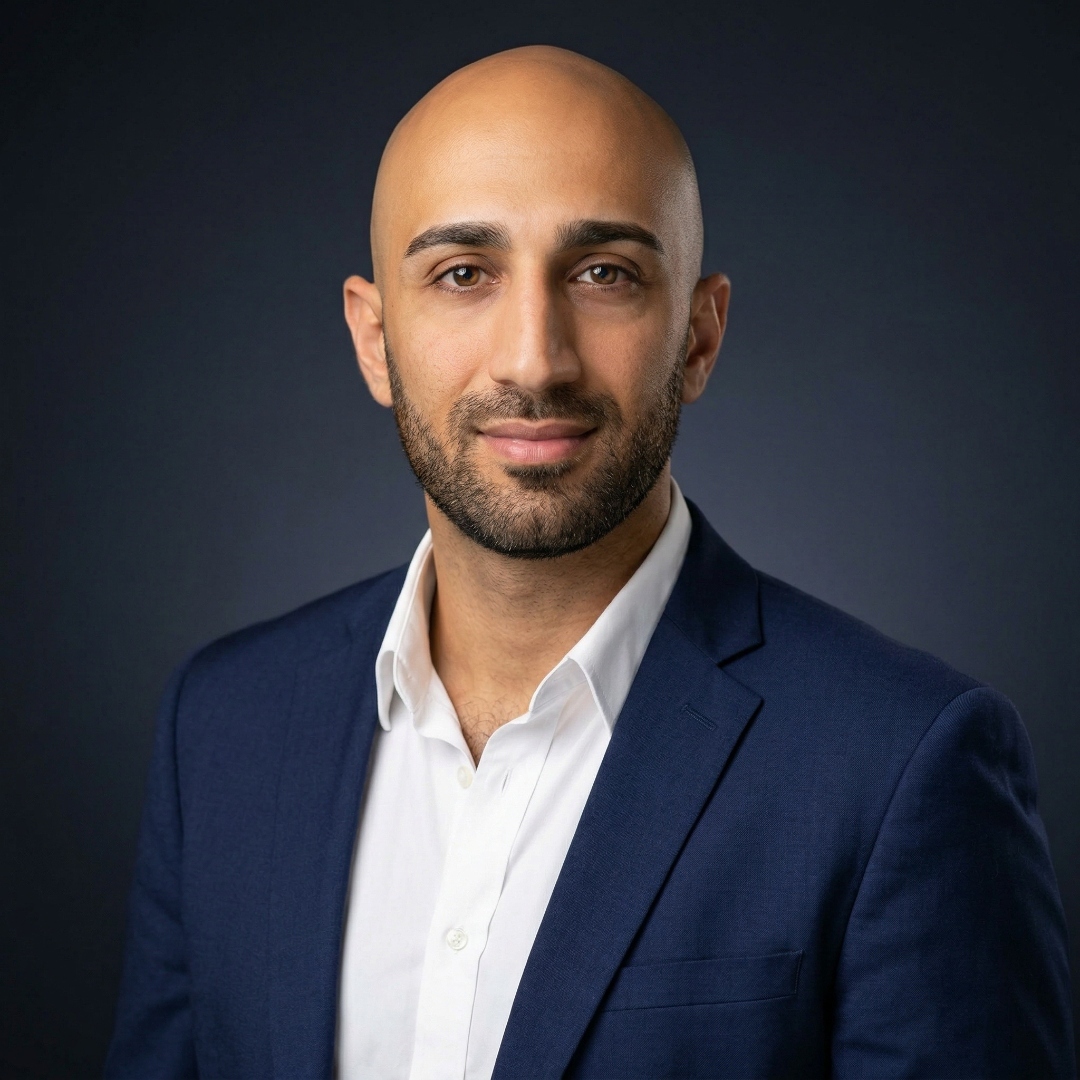
Healthcare M&AI is a fractional CFO and transaction advisory practice for physician-owned practices. I built it after a career in M&A and strategic finance, most of it in healthcare, with $1B+ in cumulative transaction value across my career. At healthcare platforms I worked the full deal cycle, from market landscaping and origination through diligence, document negotiation, and closing, across 130+ centers acquired.
Before the deal seat I built and reviewed medical-practice and ASC valuations at HealthCare Appraisers, across hospitals, surgery centers, diagnostic centers, and multi-specialty groups. That is 100+ healthcare services businesses valued before I ever sat on the buy side.
Those two halves are the whole business. Physician owners get financial leadership from someone who knows how a buyer reads the numbers, from the monthly close to the biggest decisions they will make. Deal teams get the sourcing and pipeline work built by someone who has had to close on it.
Common questions.
What does a fractional CFO do for a physician-owned practice?
It is the standing finance seat a founder-owned practice rarely fills: monthly and quarterly performance reviews, a rolling 13-week cash plan, profitability separated by location, payer, and service line, pricing and cost structure work, and an indicative valuation refreshed each year. The work is flat-fee and scoped in writing before each phase.
When does converting an office-based surgical suite into an ASC make sense?
It turns on covered case volume. An office cannot bill a separate facility fee, while a licensed and Medicare-certified ASC can, so the upside sits on insured and medically necessary cases rather than cash-pay cosmetic work. Case mix, volume, and outside surgeon demand decide it, and all three can be modeled before any capital moves.
How do I find out what my medical practice is worth?
An indicative valuation analysis normalizes earnings to what a buyer would use, benchmarks against comparable transactions in your specialty and geography, and ranks the drivers pushing your number up or down. It is prepared for internal management planning rather than as a formal opinion, and most owners refresh it annually.
What does Healthcare M&AI do for healthcare deal teams?
Market maps, deal sourcing, deal screening automation, and pre-LOI deal intelligence for the platforms, funds, and banks that acquire practices, built by a practitioner without the cost of a full-time hire. It gives lean deal teams senior deal bandwidth without adding headcount to SG&A or compressing enterprise value at exit.
Start an engagement.
Tell us what you are deciding, and you can book a 25-minute call on the next page. Prefer to talk first? Book the call directly.